
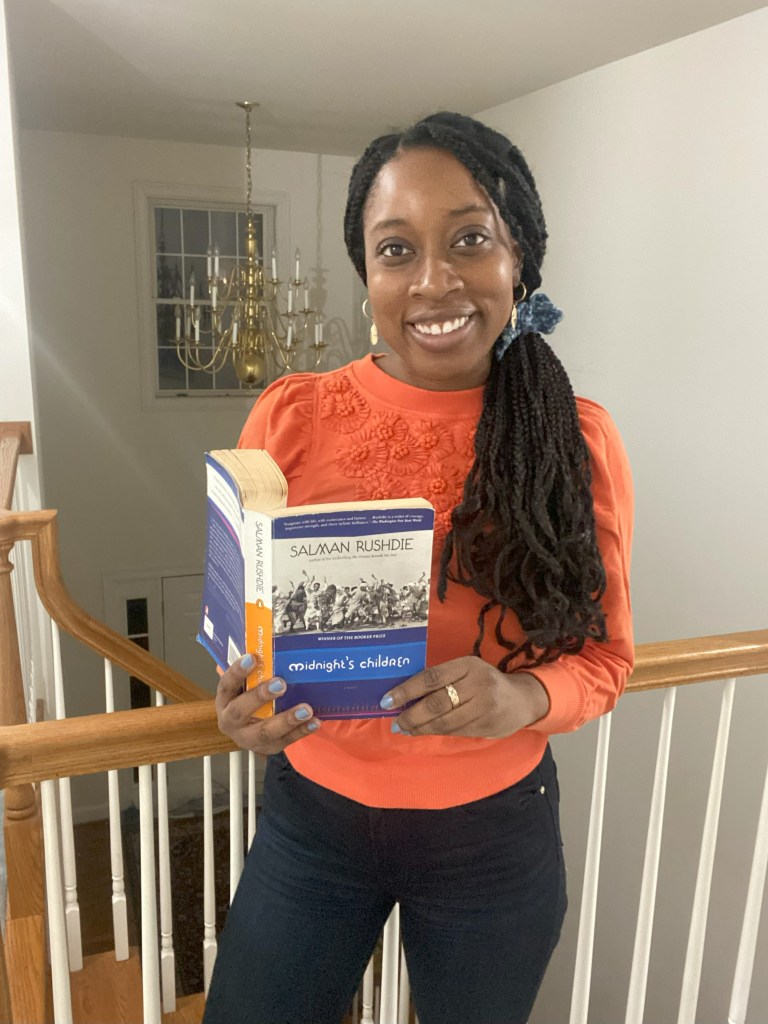
Midnight’s Children Book Review

Midnight’s Children is a long-winded story of Indian independence told by a self-important narrator, Saleem Sinai, who isn’t born until almost 150 pages in. Saleem claims to have special abilities because he was born at midnight on the day India officially became a country. It is amusing to see how he relates monumental events to himself and his misshapen nose. Saleem writes “…life in Bombay was as multitudinously shapeless as ever…except that I had arrived; I was already beginning to take my place at the center of the universe; and by the time I had finished, I would give meaning to it all.” He blames himself and takes credit for things that occurred before his parents even met. He justifies it with the belief that, “Most of what matters in your life takes place in your absence.”  

The writing of this is so excessively florid that it’s hard to follow not just at times but for most of the time. Usually I find books like this the author’s tedious way of proving they know a lot of words and can make a fancy sentence. However, though cumbersome for the reader, the garrulous voice fits so well with Saleem’s personality.

The story of Saleem growing up with a feral little sister, a capricious father and a mother who carries around secrets takes place in the backdrop of newly formed India. Saleem is the most unreliable of narrators. There are a lot of things you have to believe in order to believe him. First, that he has a prophetic nose. Second, that his memory is reliable. I found myself often asking, “is this true?” in the context of the story. And then, “is this true?” in the context of the real world. The second part requires more than just a deep knowledge of Indian history. It’s a rhetorical question that Rushdie forces on the reader. As Saleem recounts events and sometimes edits them he also tells the history of the Indo-Pakistani war. One of the most poignant points in the book is when Saleem is talking about the bombs that killed his family and how they were reported by All-India Radio versus what he experienced on the ground in Pakistan. He tries to examine the facts of the war with “an analytical, unprejudiced eye”.

“Important to concentrate on good hard facts. But which facts? Who attacked? Who defended? Were there parachutists or were there not? Did Islamic mirages and mysteries do battle with Hindu invaders, or was it all some kind of astonishing illusion? Did bombs fall? Were explosions true? Could even a death be said to be the case? On the night of September 22nd air-raids took place over every Pakistani city. Aircraft, real or fictional, dropped actual or mythical bombs. It is, accordingly, either a matter of fact or a figment of a diseased imagination that three bombs [eliminated my benighted family from the face of the earth].”

Admittedly I butchered and rearranged the many paged passage for ease of reading, but the message is the same. Suddenly, it seems silly to question a 12-year-old boy’s declaration that he can smell if a girl has a crush on him or if his mother is having an affair. There is no way to know the truth on these trivial matters if we can’t even agree on the truth of larger matters. Truth is subjective depending on whose facts we use. Even Saleem who bore witness to the death of relatives had to question what he was seeing before his eyes. In Saleem’s world news is controlled by a singular entity. In our world anyone can become a news source. In both extremes it is hard to point to an objective truth.

Overall, Midnight’s Children was tough to get through, even the second time around. Viscous might not be the most accurate way to describe a book but it’s the word that comes to mind with this one. However, I think this book was so clever at times that it’s worth wading through. My advice: read this book at the same time as a much lighter, more fluid read.
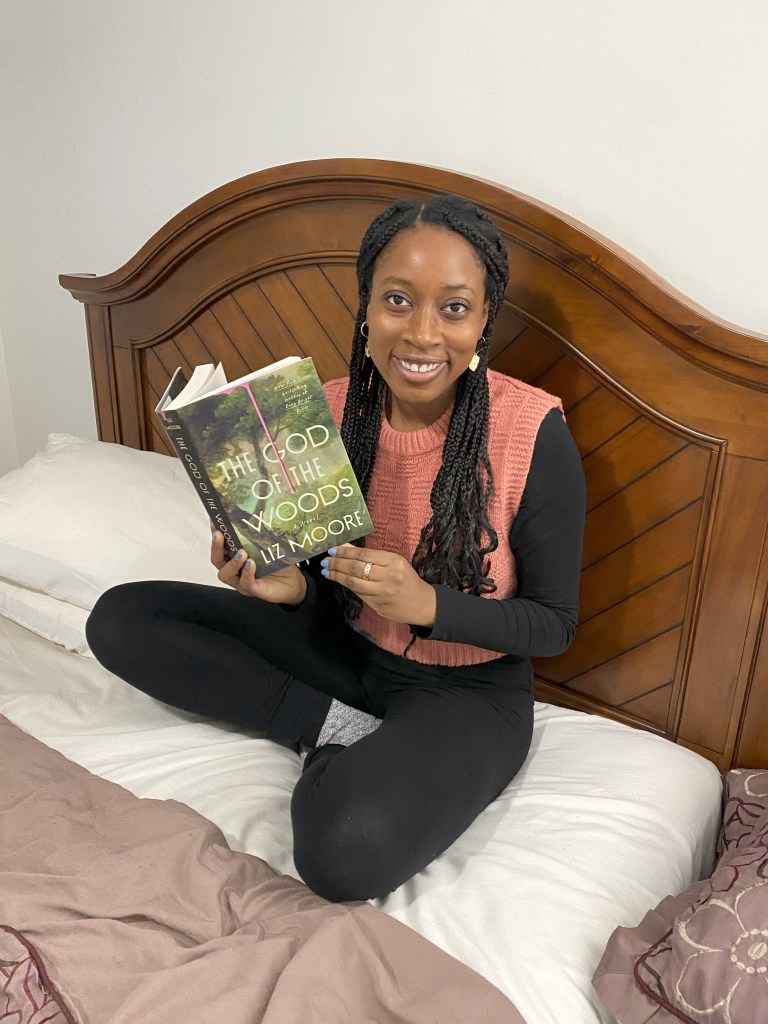

The God of the Woods Book Review

In summer of 1975 a missing girl causes a frenzy at a camp in upstate New York. Barbara Van Laar, the camper in question, is the teenaged daughter of the family who owns the camp. Barbara’s mother, Alice, sends her to camp, so she won’t have to deal with her angsty daughter all summer. Their relationship is best summarized by this sentiment: “Part of a mother’s duty was to be her daughter’s first, best critic; to fortify her during her childhood, so that in womanhood she could gracefully withstand any assault or insult launched in her direction.” Alice exists in a constant fog sustained by the pills and alcohol she uses to numb the trauma associated with her son’s disappearance in the woods years ago. She also needs it to deal with her husband, a dominating yet aloof man who is part of the dynasty that owns the land the camp sits on. The dynamic of these three is worse than dysfunctional. They seem to be happiest when they are all in separate residences.

A large part of this book centers around the often unspoken grief of everyone who is living with the aftermath of the boy who vanished. When Barbara goes missing as well, the unresolved feelings and the mystery of what happened to the Van Laar boy both resurface. In this there are strong class and power dynamics at play as everyone in the small-town tiptoes around the influential family. This hinders both these investigations. Another part of the book is a much lighter coming of age tale that takes place at camp. Early on Barbara befriends Tracy, a socially awkward camper. Like Barbara, Tracy was sent to camp against her will. It’s fun to see the two of them form a friendship, talk about boys, share secrets and to see Tracy gain confidence through Barbara’s kindness.

Spoiler Alert:

In the end its revealed that Alice accidentally killed her own son 15 years prior. She took him out on a boat in the middle of a storm after having gotten drunk to forget that she had just walked in on her sister sleeping with her husband. In present day, Barbara escapes deep into the woods where she plans to live until she’s 18 and can make her own decisions. I had moments of sympathy for Barbara and Alice and even Alice’s husband. However, I mostly felt like I did at the end of Great Gatsby where I deemed that everybody, Barbara included, kind of sucked. Disappearing felt immature and dramatic. It also felt unlikely she could live in the woods full time for 4 years. For a moment I felt for Alice when she remembered that she was responsible for Bear’s death. But mostly I felt annoyed by her and that no one had stopped her when she took her son out on the lake in a storm. I would have felt for the Van Laar family because no matter how poor their ethics, they didn’t deserve to lose Bear. However, they were hard to like and finding out they covered up Bear’s death to save public embarrassment made it impossible. At times The God of the Woods was reminiscent of Girl with the Dragon Tattoo because of the multigenerational murder mystery aspect. It made me wonder if it’s common practice for rich people to murder and cover it up or if it just makes for a good story.

There were a few plotlines whose resolution I wasn’t invest in. The recently escaped mass murderer at large in the woods was too obvious to be Barbara’s abductor as was the old woman who was rumored to roam around the woods screaming. Thankfully the writing was compelling, and I could move through the book quickly rather than getting bogged down in these side plots that were meant to throw you off the scent. It also gave me a certain nostalgia even though I have never been to camp. Overall, this was a fun read and a good palette cleanser after struggling through some denser books.

Hello Beautiful

Hello Beautiful is a novel that takes place over four decades. It starts with the birth of William in 1960. Days after William is born, his older sister dies leaving William to be brought up in a cold household where he is ignored by his grieving parents. William’s finds joy in basketball because it is the first time he is acknowledged and included in a group. He gets good enough that he is offered a scholarship to Northwestern where he meets Julia. She is the opposite of William in many ways: short, ambitious, full of life. She is also from a close-knit working-class family where she has three younger sisters and two present parents. In some ways, Julia and William complement each other because he is so lost, and she is so sure of herself. But it’s the thing that draws them together that ultimately drives them apart.

Spoiler alert:

Julia and William get married right after college as part of Julia’s life plan. After they have a child Julia realizes she can’t be parenting William and their daughter. William realizes that Julia, like everybody else in his life, doesn’t really love him. He also realizes that he will not be a pro basketball player and there’s nothing else he’s good at or interested in. One night William walks out on Julia and their baby and tries to drown himself in a lake. Julia’s sister, Sylvie, realizes something might be wrong. She gathers his old teammates to start a search party for him. Julia and the other Padavano sisters are too caught up in their anger with William to care or understand why Sylvie does.

One of the things I like about this book is that each character, aside from William, is often so resolute in the lines they draw that they force a moral question. Is Sylvie right to have formed a relationship with her sister’s ex-husband? Is Julia right to cut off not only Sylvie but her other two sisters? Can we still cheer for William when he abandoned his daughter? These are the questions the readers and the characters grapple with over the next few decades as the novel winds to 2008 where William and Julia’s grown-up daughter, Alice, is discovering the family Julia removed herself from so long ago. No matter who you side with in the moment, you come away with the understanding that life is messy and complicated and short and full of curveballs.

Hello Beautiful is about family and sisterhood and grief and how things that seem so clear to us blur over time. One of my favorite lines is “…just because you never thought about someone didn’t mean they weren’t inside you.” It’s meant to signify that even though William didn’t talk to his parents and his parents didn’t talk about his deceased sister, they were still a part of his life story. This is also true about Julia and her estranged sisters and Alice and the father she’s never met but resembles. The lines that connect people are permanent. Even when they lay slack for so long, they can still reel in two people with shared history.

The Collected Regrets of Clover

I LOVED this book. That’s my four-word review of The Collected Regrets of Clover which received one of my elusive five-star ratings and was definitively my favorite read of 2024.  I found myself screaming laughing at this because it was so good. It has a bit of the flavor of Eleanor Oliphant is Completely Fine without the deep dark tragedy mixed in. Just a weird girl in New York trying to be a little less weird so she can find a boyfriend (sounds about right).

Clover is a social recluse who only comes out of her apartment to perform her duties as a death doula, which is in fact a real thing, and attend death cafes. She is hired to sit with the dying for anything from a few minutes to a few weeks/months and usher them gracefully into death. She collects her client’s profound last words which she sorts into Advice, Confessions and Regrets.

What makes this book so good is Clover’s voice. I am drawn to books about characters that are a bit unhinged and was amused by how much Clover’s thoughts and actions resonated with me. At one moment she says, “I managed to go the next five days without interacting with a soul. At first it soothed, swaddling me from the chaos and expectations of being human. Then, in an instant, it shifted from rejuvenation to numbing isolation.” Clover beautifully captures the very fine line between an introvert’s joy of being alone and the despair that comes with being lonely; two moments that are identical on the surface but feel completely different. There were times throughout the book where I asked myself, did I write this? (I wish).

The frustrating thing about Clover is that she doesn’t seem to be doing anything that will move her closer to the thing she wants. She spends days losing herself in romantic movies and TV but when a real-life boy tries to talk to her, she runs in the other direction. She wants friends but literally hides in her apartment timing her movements to avoid her neighbors.

Clover learns many things along the way. How to get over her fears in order to experience more of life, how to deal with loss appropriately, how to live in reality instead of a fantasy world. Ultimately she uncovers, “The secret to a beautiful death is to live a beautiful life. Putting your heart out there. Letting it get broken. Taking chances. Making mistakes.” It’s something that we all know but perhaps need to be reminded of when we’re being overprotective of ourselves.

This is one of those books you go running home to because you can’t wait to read more and also savor because you know you’re going to miss it when it ends. What a great debut novel from Mikki Brammer.